This Is the Canadian Adventure I’ll Be Telling People About for Years

Renata Lewis

The first thing anyone tells you about driving Newfoundland’s Northern Peninsula is to watch for moose. It’s also the second and third thing they’ll tell you: watch for the moose.
But what some of the locals often fail to mention—maybe because Newfoundlanders are so well-acquainted with the beauty of their island—is how the Earth opens up for you in all her glory as you start driving. On one side, towering mountains wrapped in mist with waterfalls dripping down the rocks. On the other, ponds that appear and disappear and a never-ending coastline. I must have turned to my husband six times and said, “This looks like Jurassic Park.” He agreed every time.
I landed in Deer Lake on a rainy Friday evening in June before renting a car and driving to Cormack, a small community with its own World War II history and some of the most unique places to stay on the peninsula.

It was early evening when we met Lauralee LeDrew who runs a six-acre farmstay called Upper Humber Settlement. Lauralee is the perfect introduction to this place, and arguably the embodiment of the Newfoundland spirit. There’s a freedom in how she carries herself as, a natural storyteller, comfortable in her own forest and fluent in the language of nature. She took us on a foraging walk through the backwoods as evening settled in, teaching us to identify fiddleheads and wild edibles, before cooking us a meal that included alder pepper, fireweeds and caribou. Things that felt extraordinary to me and completely ordinary to her.
When she asked about our plans for the morning, we told her we were starting with a guided bee tour at Pollen Nation Farm. She nodded in approval. Indigenous-owned and locally loved, Pollen Nation is home to some of the only disease-free honeybees in the world—a fact that tastes true in every spoonful.
Our trip started in Cormack, but the goal was to reach Quirpon Island, at the very tip of the peninsula, where a lighthouse inn sits at the edge of the world. And so, the five hour trek began. All along the coast, we were greeted by small communities of no more than 40 colourful houses pitched against the ocean, salt-worn and far from everything that represents modern comforts. It was hard not to stop and take pictures.
We made a pitstop in Port aux Choix to visit the National Historic Site, one of North America’s most significant archaeological sites, with 6,000 years of Indigenous history. We didn’t stay long because the anxiety of night driving in the rain was competing with our sense of historical wonder. What we did do was find the Anchor Cafe, where the lobster rolls are genuinely excellent.
Roddickton is known as“the moose capital of the world,” and after counting at least 12 crossing the road on our way there, this is no exaggeration. Nearly six hours of slow driving and moose dodging later, arriving at the warm and woody Mayflower Inn felt like both a hug and a victory badge.
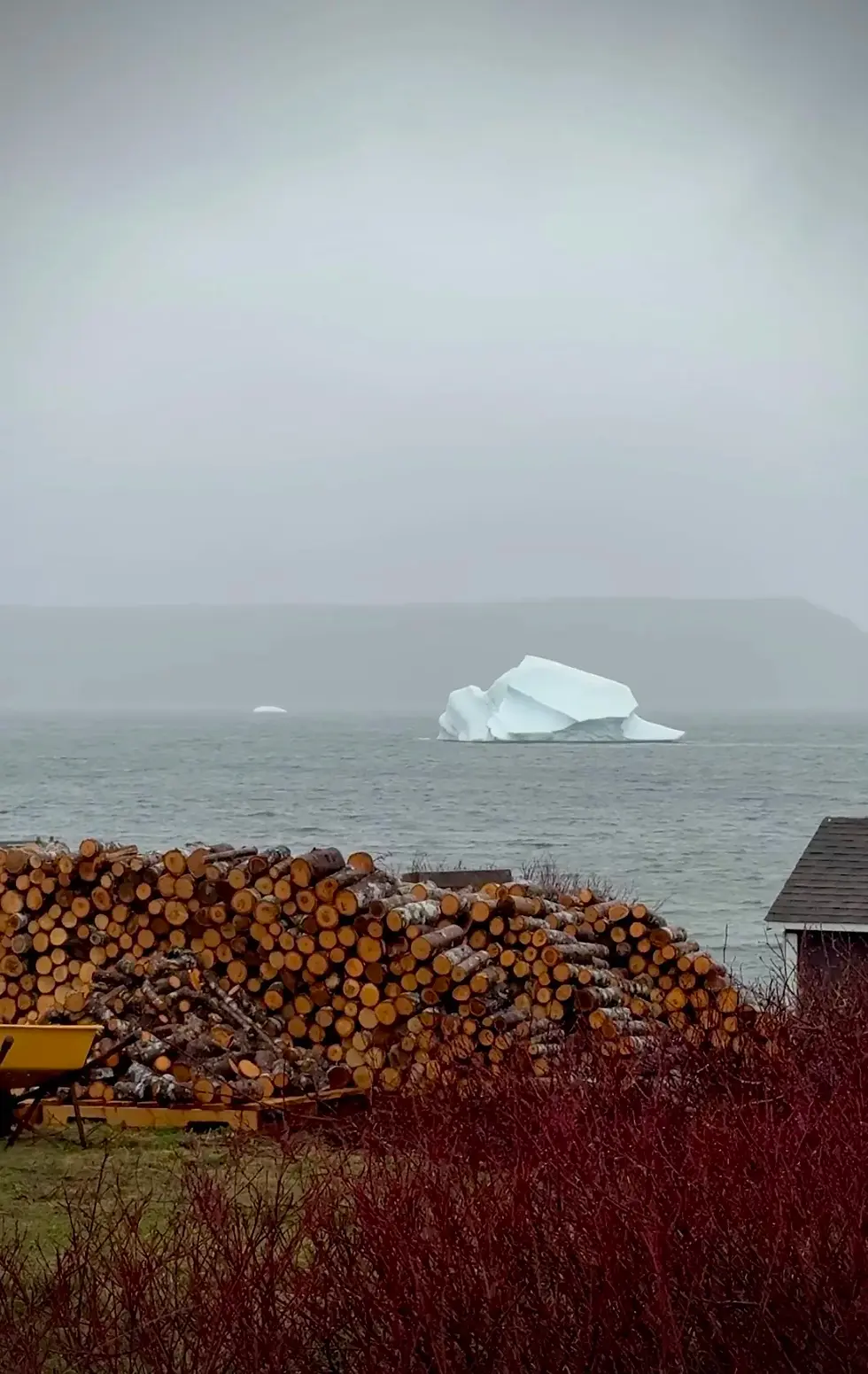
The next morning, we headed for Conche, where we first laid eyes on an iceberg. It reminded me of seeing an elephant for the first time at the zoo—that shock of being so close to something you’ve only ever seen in photos. Knowing it calved off Greenland thousands of years ago, slowly making its way to these shores, made it feel like we were both visitors who happened to find each other in this moment in time.
We got an espresso from Boutitoue, a small food truck parked at the edge of it all (easily the most beautiful coffee shop in the world) before making our way farther north to Quirpon Island.
Getting to the Quirpon Island Lighthouse Inn requires commitment, and ours was tested immediately. The rough weather ruled out the zodiac, which on a clear day would have been a beautiful way to arrive. Instead, we faced a slippery 5.5-kilometre hike in the rain, wind and mud. I went into full survival mode, pretending I was on Amazing Race to help me overcome my tired body. When we finally made it two hours later, I felt like an absolute drenched and muddy champion.
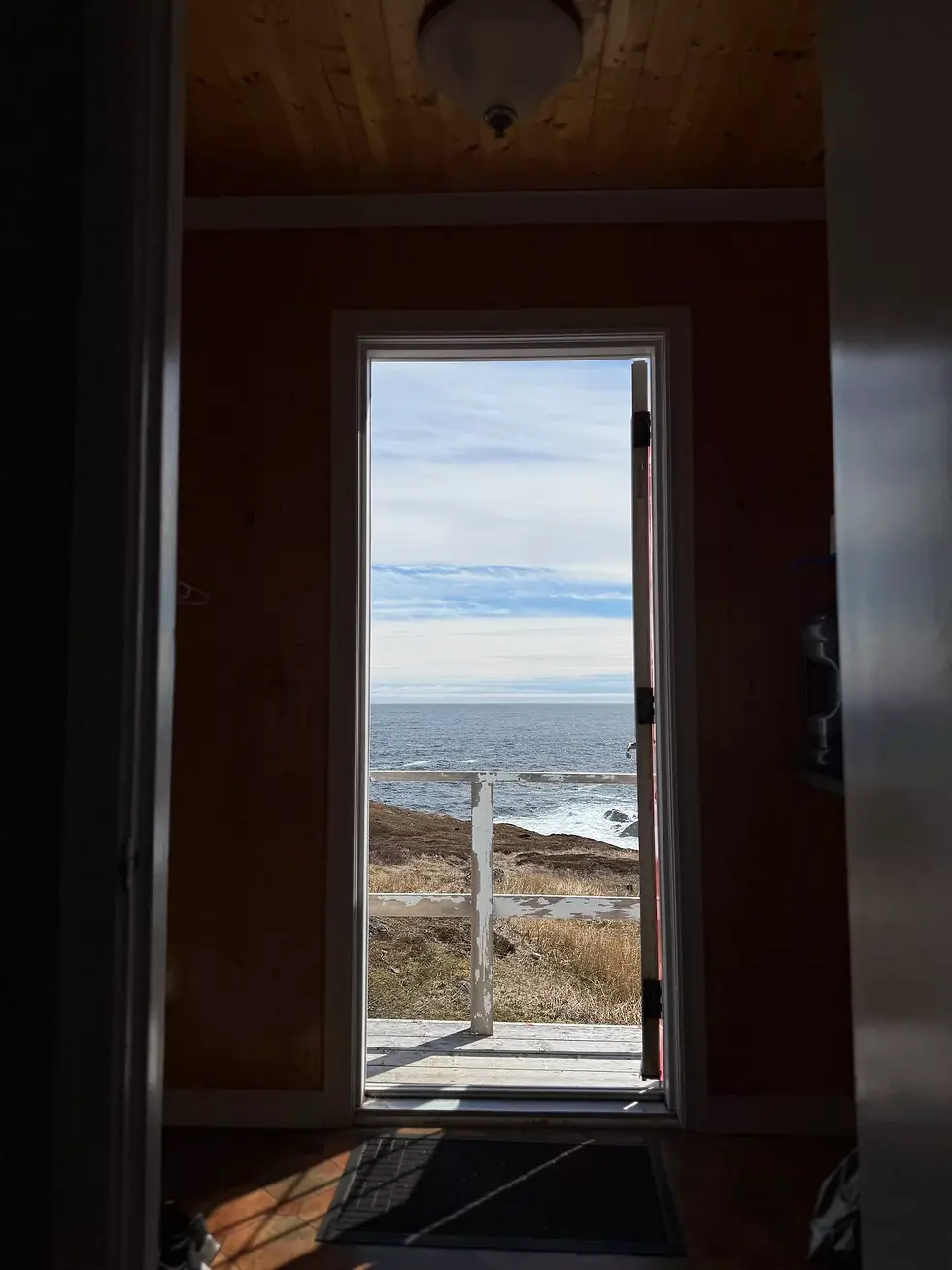
The Quirpon Lighthouse Inn is a 1922 lightkeeper’s home at the base of an active lighthouse. Its white clapboard and red paint give it the exact look you’d imagine a lighthouse to have. Except this one has been here since the 1920s, so the paint is worn, and the floors creak. Inside, guests gather in the communal living room and share stories. If you’re lucky, you’ll get one bar of signal on your phone, and there’s no lock on the front door because no one can reach the island without a boat. There’s not much else to do on a remote island except contemplate life as you wander the rust-coloured landscape, trying to catch a view of a whale or arctic fox. The world as you know it is happening somewhere out there, but here, it’s just you and the ocean.
The next morning, we took a zodiac out into the open ocean to find icebergs. The waves were relentless, and I’m pretty sure I cut the circulation in my husband’s arm from holding him so tight. But there was a moment, surrounded by ocean in every direction, with a wall of ancient ice beside us, when one thought cut through the fear: the Earth is beautiful and wild and scary. What a privilege to be a part of it.

On our way back, we stopped at L’Anse aux Meadows, the only authenticated Norse settlement in North America. Characters in full Viking dress wander a recreated settlement, ready to answer every question about the Norse warriors who once called this place home. We met one who introduced herself as Thora the Battle Axe, and we loved her for making us feel like we had stepped back in time.
As I reflect on my time on the peninsula, this trip is not for everyone, and I say that as a complete compliment to the place. It’s for the person who is genuinely seeking disconnection and rugged adventure. Not the curated, sanitized, four-bar-signal version, but the real, raw thing. The person who will drive through rain and watch for moose and hike five kilometres in wet boots to sleep in a lighthouse with an unlocked door.
There’s no performance here. No polish or pretence. What you’ll find are people who are fully comfortable in their own skin, and a land that meets you the same way. Head on, unfiltered and sincerely unforgettable.

Accommodations
Upper Humber Settlement (Cormack): farmstay B&B offering foraging tours
Mayflower Inn (Roddickton): base camp in the moose capital of the world
Quirpon Lighthouse Inn: the whole point; book directly via Linkum Tours
Raleigh Rooms (Raleigh): simple, clean, next to Burnt Cape Reserve
Rocky Brook Acres (Cormack): cabins and a beautifully renovated church turned B&B
What to Eat:
Anchor Cafe, Port aux Choix: local seafood
The Daily Catch, St. Lunaire-Griquet: lobster, snow crab, live music, drinks made with real iceberg ice
Café Nymphe at The Dark Tickle Company, St. Lunaire-Griquet: wild berry ice cream and chocolate
The Black Spruce at Neddies Harbour Inn, Norris Point: Chef Jason Lynch, fresh local ingredients and a view will make you forget you’re in Canada
What to Do:
Pollen Nation Farm (Little Rapids): Indigenous-owned; guided bee tour and honey tasting
French Shore Interpretation Centre (Conche): the 227-foot tapestry is worth the detour alone
L’Anse aux Meadows National Historic Site: UNESCO World Heritage; the only authenticated Norse site in North America
Burnt Cape Ecological Reserve: 300+ plant species, sea caves, and the arched Big Oven at Whale Cove
Transportation:
Ride in Style: Luxury ground transportation specializing in day trips, shore excursions, airport shuttle service, or guided tours.
Read the full article with an Explore subscription.